
Types of Earring Hooks and Ear Wires (and How to Make Your Own)
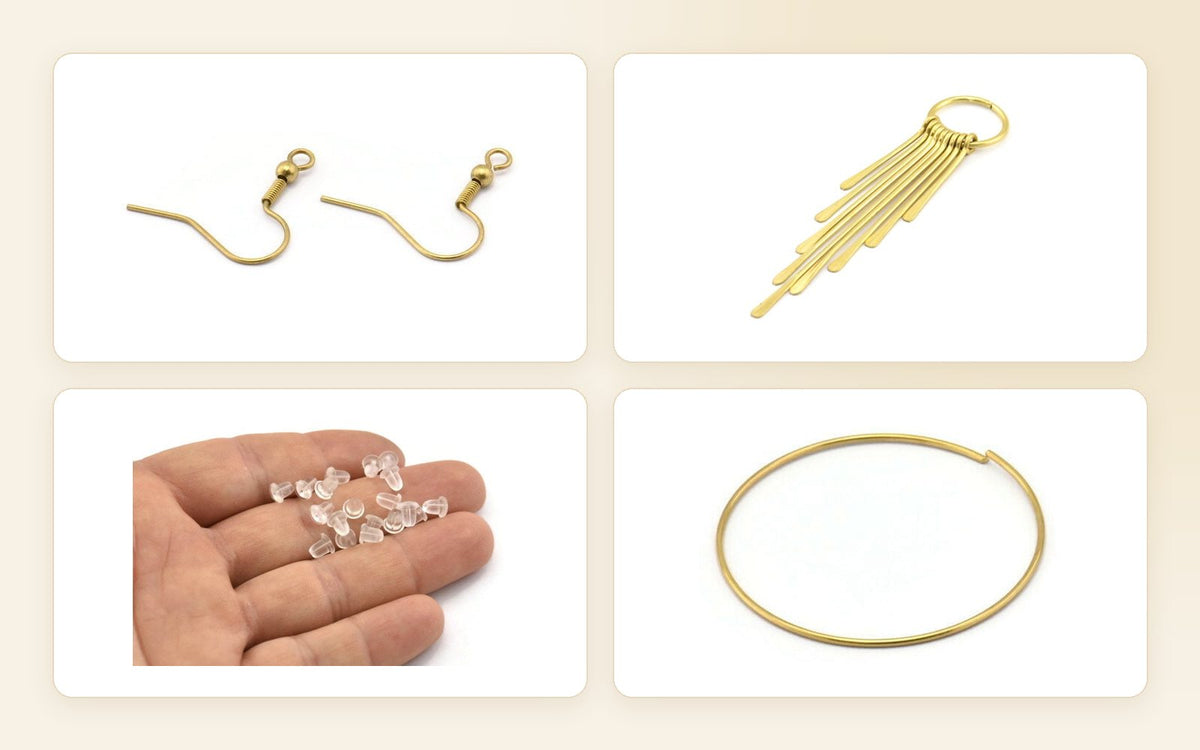
The main earring hook types are fish hook (French wire), ball and coil fish hook, leverback, kidney wire, shepherd hook, hoop ear wire and ear threader. Leverbacks and kidney wires are the most secure; plain fish hooks are the easiest to use and should get a rubber stopper.
Fish hook (French wire)
The classic curved hook with an open end and a loop at the front for your charm. Light, comfortable and inexpensive. Because the back is open, add a small rubber stopper so the earring cannot slide out.
Ball and coil fish hook
A fish hook with a small ball and a few coils of wire at the front. It hides the loop, adds a finished look and stops the charm from sliding up.


Leverback
A curved wire with a hinged lever at the back that snaps shut. Very secure and elegant, ideal for valuable or heavier dangles.
Kidney wire
A kidney-shaped wire whose end hooks into a small catch at the bottom. Secure and minimal.
Shepherd hook
A long hook with a decorative straight drop at the front instead of a loop; charms are attached at the bottom of the drop.
Hoop ear wires and huggies
Round wires that close with a catch or hinge. Slide charms or beads straight on, or hang them from the bottom.
Ear threaders
A fine chain or wire that is pulled through the piercing and hangs on both sides of the lobe. Very modern and light.
Posts with loops
A stud earring post with a small loop underneath for hanging a charm. A good middle ground between studs and dangles.
Which earring hook to choose
| Hook | Security | Best for |
|---|---|---|
| Fish hook | Medium (use stopper) | Everyday light dangles |
| Ball and coil | Medium | Finished, professional look |
| Leverback | High | Heavier or valuable earrings |
| Kidney wire | High | Minimal, secure dangles |
| Hoop ear wire | High | Beads and small charms |
| Threader | Medium | Modern, lightweight styles |
Metals for sensitive ears
Ear wires sit in the piercing, so they matter most. 925 sterling silver and stainless steel are good choices for sensitive ears. Brass, copper and plated wires suit most people and match brass charms perfectly.
How to make earring hooks
You need 20 or 21 gauge wire (0.7–0.8 mm), round-nose pliers, flush cutters, a pen or round mandrel about 8–10 mm thick, and a metal file or cup bur.
- Cut two pieces of wire about 2 inches (5 cm) long.
- Make a small loop at one end with the tip of your round-nose pliers. This is where the charm will hang.
- About 3/8 inch (1 cm) above the loop, bend the wire back over the pen or mandrel to form the hook curve.
- Bend the last few millimeters outward slightly so the hook is easy to insert.
- File the end until it is perfectly smooth, so it will not scratch the ear.
- Optionally, tap the curve a few times with a hammer on a bench block to harden it so it keeps its shape.
- Make the second hook by matching it against the first.
Ready to build the full earring? See How to Make Earrings.
Frequently asked questions
What are earring hooks called?
Ear wires. The most common style is the fish hook, also called a French wire or French hook.
What is the most secure earring hook?
Leverbacks and kidney wires, because the back closes.
What gauge are earring hooks?
Usually 20–21 gauge (0.7–0.8 mm), which fits standard piercings.
Shop Earring Hooks & Ear Wires
View all →


More jewelry making guides
All guides →
How to Stamp Metal Jewelry: A Beginner's Guide to Stamping Blanks
Metal stamping needs steel letter stamps, a 1–2 lb hammer, a steel bench block and soft-metal blanks like brass or copper. Strike...

Jump Ring Sizes Chart: Gauge, mm and How to Open and Use Jump Rings
Jump rings are sized by outer diameter in mm and wire thickness in gauge or mm. 4–6 mm rings in 0.7–0.8 mm...

How to Make a Charm Bracelet: Step-by-Step Guide
A charm bracelet is a chain sized to your wrist plus half an inch, a lobster clasp, and charms attached every few...